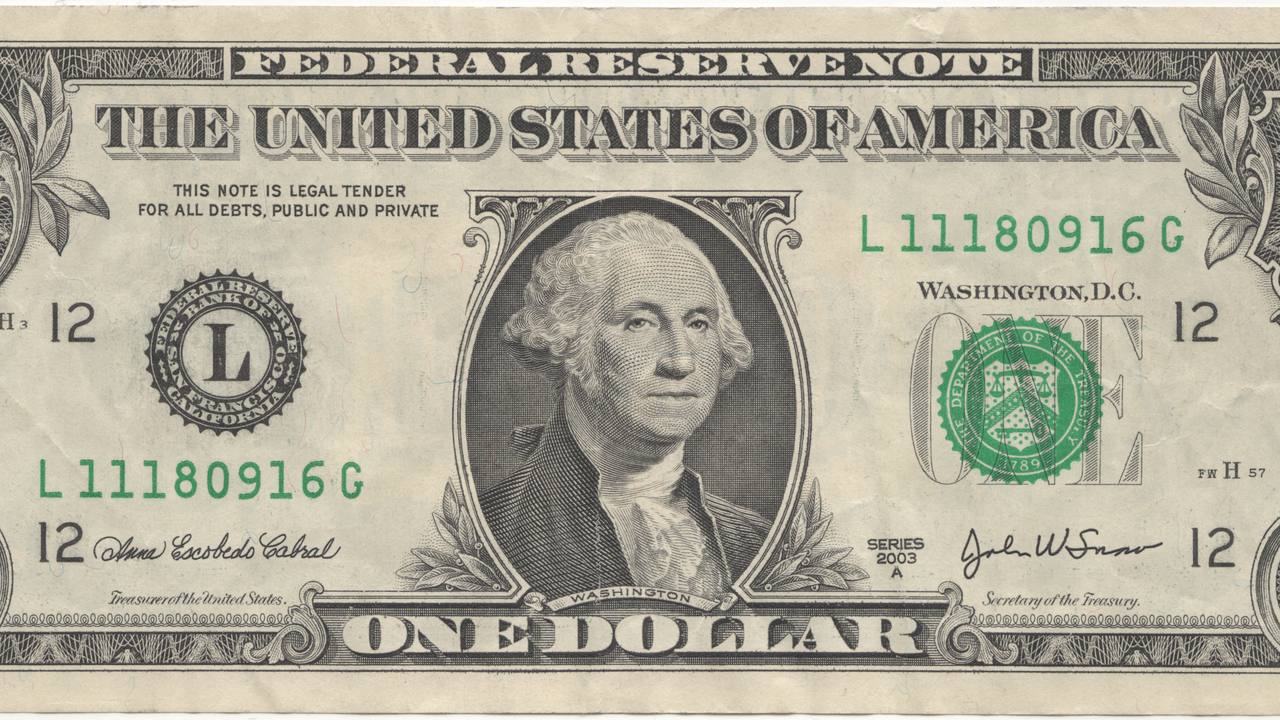
Somewhere in your wallet, your pocket or the drawer where loose cash ends up, there may be a dollar bill worth more than one dollar. Not because it is old, and not because of anything dramatic printed on its face — but because of two small green numbers that almost nobody ever reads: the bill's serial numbers.
Every United States banknote carries a unique serial number, printed twice on the front. To most of us it is invisible. To collectors, it is the whole game. Certain serial numbers — and one special symbol hiding at the end of them — turn an ordinary dollar into a collectible that people actively hunt for and pay premiums to own. Checking takes about ten seconds, and it costs nothing. Here is exactly what to look for.
First, Find The Star
The easiest collectible to spot is the star note. When the Bureau of Engraving and Printing — the government bureau that prints America's paper money — finds a damaged or defective bill during production, it destroys that bill and prints a replacement. The replacement carries the same serial number as the destroyed note, except the letter at the end is swapped for a small star (an asterisk). Collectors call these star notes.
Because replacements are only printed when something goes wrong, star notes make up a small fraction of the bills in circulation, and for some print runs they are genuinely scarce. An ordinary, heavily worn star note from a common run may only be worth a few dollars over face value — but scarcer runs and older notes can be worth considerably more to the right collector. Either way, the star is the single fastest thing to check: look at the end of the green serial number, on both sides of the portrait.
The 'Fancy' Serial Numbers Collectors Hunt For
The second category is what dealers call fancy serial numbers — eight-digit sequences that form patterns. The most wanted include ladders, such as 12345678 or the descending 87654321; radars, which read the same forwards and backwards, like 12344321; and repeaters, such as 12121212. Very low numbers — 00000001 through roughly 00000010 — are prized because so few exist for any print run, and solid numbers, where all eight digits are identical (11111111, 77777777), are rarer still.
There are also birthday notes, whose digits spell out a date (for example, a sequence containing a birth year and month a buyer happens to want), and near-misses that nearly form a pattern — those are worth face value, which is a useful reminder that the pattern has to be exact. The rarer and cleaner the pattern, the stronger the collector interest. A bill with two desirable traits at once — say, a star note with a ladder serial — is the kind of find collectors talk about.
Asking prices are wishes. Sold listings are the market.
Now The Honest Part: What Are They Actually Worth?
This is where most articles on this topic stop being honest, so let us be careful. The overwhelming majority of dollar bills — including most star notes and many fancy serials that are worn, folded or dirty — are worth face value or a modest premium, often in the range of a few dollars to a few tens of dollars. Condition is everything in this market. Collectors pay for crisp, uncirculated bills that look the way they did the day they were printed; a rare serial number on a bill that has clearly lived in a wallet for five years loses most of its premium.
At the top end, the story is real but narrow: genuinely rare combinations — very low serials, perfect solid numbers, scarce star-note runs — in top graded condition have sold for hundreds of dollars, and exceptional examples for thousands. Those are the headline cases, not the typical ones. Think of checking your bills as a free lottery ticket you already own, not a retirement plan.
How To Check Your Wallet In Two Minutes
Lay your bills flat and read the green serial number on the front — it appears twice, and the two should match. First, look at the last character: is it a star instead of a letter? Second, read the eight digits slowly and ask whether they form a ladder, a radar, a repeater, a solid, or a very low number. Third, if you find something promising, search completed and sold listings — not active asking prices — for similar bills to see what buyers actually paid.
If a bill looks like a real find, handle it like one: slide it into a plain envelope or a currency sleeve, keep it flat and dry, and never try to clean, iron or wash it — amateur cleaning is one of the fastest ways to turn a collectible back into a dollar. A reputable currency dealer can confirm value and grading if the bill seems significant.
And if your wallet turns out to hold nothing but ordinary dollars? You have lost two minutes and gained a habit worth having. Money passes through our hands every day with its story unread. Every so often, the story is worth more than the bill.