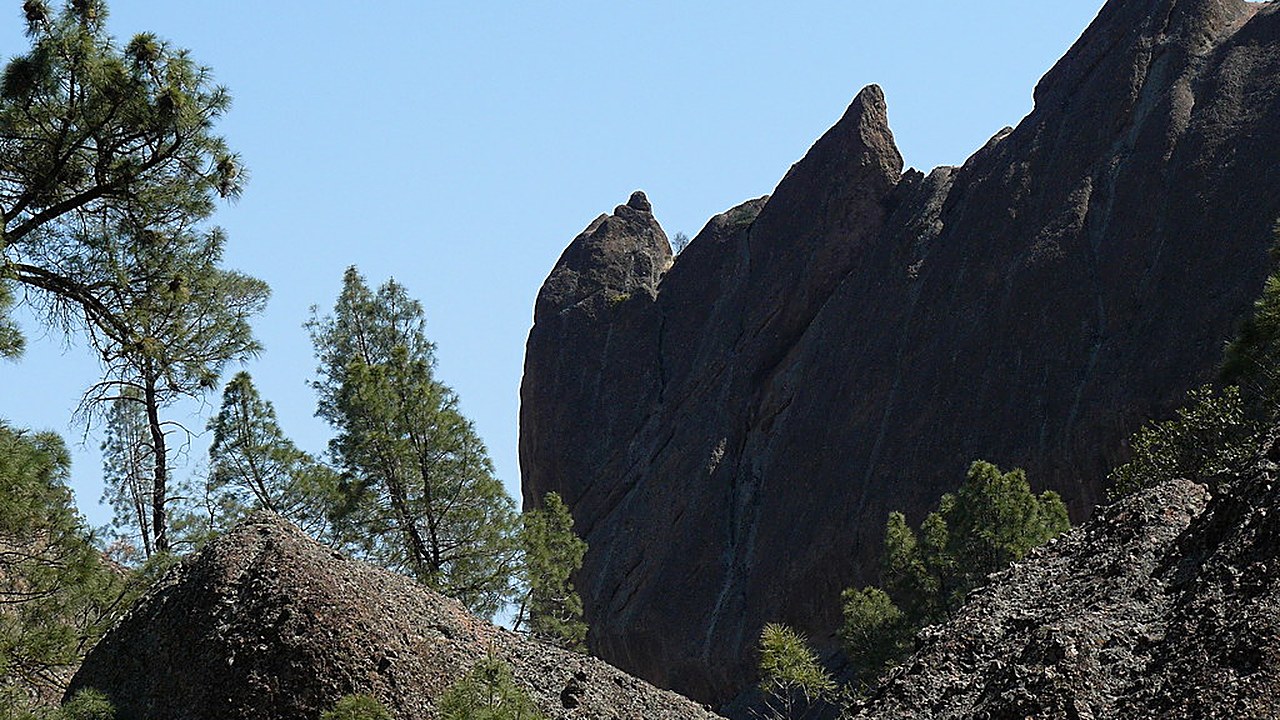
A magnitude 5.0 earthquake struck Central California late on Thursday night, November 19, at 10:49 p.m. Pacific time. The U.S. Geological Survey puts the epicenter 10 kilometres northwest of Pinnacles, in Pinnacles National Park country about 13 miles southwest of Soledad, at a shallow depth of 6.7 kilometres. The shaking reached intensity VI — strong — on the Modified Mercalli scale, and 2,805 people filed "Did You Feel It?" reports with the USGS. No injuries or major damage had been reported by Friday morning, and the USGS impact estimate is green: no casualties and little or no economic damage expected.
It did not arrive alone. The evening's seismic activity began nearly an hour earlier, with a magnitude 3.1 quake at 9:53 p.m., followed by a magnitude 3.3 at 10:12 p.m. The 5.0 came about 37 minutes after that second tremor. More than a dozen earthquakes between magnitudes 2.5 and 3.0 have followed it in the same area, along the San Andreas Fault, which runs along the California Highway 25 corridor south of Hollister. The USGS ShakeAlert early-warning system activated, sending notifications urging people to drop, cover and hold on. Early readings put the main quake at 5.4, then 5.1; the USGS reviewed solution, checked by a seismologist, settles it at 5.0.
Why Los Angeles Is Searching
By Friday morning, "earthquake Los Angeles" was one of the most searched phrases in the United States, with more than 100,000 searches and still rising. The Pinnacles quake was felt across much of the region, with shaking reported as far north as the San Francisco Bay Area. And then Los Angeles got its own quake: a separate magnitude 4.4 struck near Commerce at 3:25 a.m. on Friday, waking the city.
One report circulating online claimed a magnitude 4.2 quake struck near downtown Los Angeles at 3:25 a.m. on Friday. That report turned out to be right in substance and wrong only on the number: the U.S. Geological Survey first reported the quake as 4.2, then revised it to 4.4 after a seismologist reviewed the data. It was a real, separate earthquake — not the Pinnacles quake, which struck more than a hundred miles up the coast.
A magnitude 5.0 earthquake is strong enough to frighten everyone who feels it. This one struck a sparsely populated stretch of Central California — and that is why it ended with felt reports instead of casualties.
THE KEY NUMBERS
Magnitude 5.0 — the USGS reviewed figure, down from the 5.4 first reported. Depth 6.7 kilometres — very shallow, which is why the shaking felt stronger at the surface. Time 10:49 p.m. Pacific, Thursday, November 19 (06:49 UTC, November 20). Epicenter 10 kilometres northwest of Pinnacles, about 13 miles southwest of Soledad. Felt reports 2,805 and counting. Intensity VI, strong, at the epicentre. Aftershock odds 66 percent chance of at least one magnitude 3.0 or greater quake in the following week, 17 percent for magnitude 4.0 or greater, 2 percent for magnitude 5.0 or greater. Injuries and major damage None reported.
QUESTIONS PEOPLE ARE ASKING
Did Los Angeles have an earthquake? Yes — a separate magnitude 4.4 struck near Commerce at 3:25 a.m. on Friday, November 20, hours after the Pinnacles quake, and was felt across the Los Angeles area. Was there a tsunami? No tsunami was expected — the quake was inland, in Central California. Will there be aftershocks? Probably: the USGS puts the chance of at least one magnitude 3.0 or greater aftershock in the next week at 66 percent. Is this the San Andreas Fault? The quakes occurred near the San Andreas Fault, along the Highway 25 corridor south of Hollister. What should you do if one hits? Drop, cover and hold on — the same guidance the ShakeAlert notifications sent out on Thursday night.
THE STORY SO FAR
9:53 p.m., Thursday, November 19 — A magnitude 3.1 earthquake is recorded near Pinnacles.
10:12 p.m. — A magnitude 3.3 follows in the same area, 37 minutes before the main quake.
10:49 p.m. — The magnitude 5.0 mainshock strikes, 10 kilometres northwest of Pinnacles, at a depth of 6.7 kilometres. ShakeAlert notifications go out.
Overnight — More than a dozen aftershocks between magnitudes 2.5 and 3.0 shake the same area.
Friday morning, November 20 — The USGS publishes its reviewed solution: magnitude 5.0. No injuries or major damage reported. Searches for "earthquake Los Angeles" pass 100,000.
WHAT HAPPENS NEXT
The USGS is watching the aftershock sequence: a magnitude 3.0 or greater aftershock in the next week is more likely than not, and smaller tremors are expected for days. No damage reports have come in, and with the epicentre in national park country rather than a city, none are expected. The number to watch is the felt-report count, which keeps climbing as people across Central California wake up and report what they felt — and the searches, which show how fast a quake 200 miles away can become a Los Angeles story.